Why Top AI Teams Switch LLMs Mid-Project (and What Breaks)
How Agentdar LLM Switching Became the Secret Weapon for Fast Content
Here’s something most content teams don’t realise until they’ve wasted a small fortune: using Claude 4 Opus to write a simple product description is like hiring a QC to draft a birthday card. Brilliant? Absolutely. Necessary? Not even close.
Agentdar.com agents are built differently. They work with multiple Large Language Models (LLMs), including Anthropic’s Claude family, OpenAI’s ChatGPT-5, and Google’s Gemini models, and they know when to switch between them. An Agentdar agent might start a project using Claude Haiku for drafting, escalate to Claude Sonnet for research, and recommend switching to Claude Opus for legal analysis within the same workflow.
The platform’s tiered model selection framework is designed to balance cost, speed, and quality for professional content creators and businesses. Fast, low-cost models like Claude Haiku handle routine writing and quick drafts. Mid-tier models such as Claude Sonnet, ChatGPT or Google’s Gemini to tackle research-heavy or multi-step analytical tasks. Top-tier models like Claude Opus step in for high-stakes, legal, or highly complex reasoning.
Content creation tasks, especially deeply-researched articles, can be compressed from several days down to hours using Agentdar agents - that’s what happens when you stop forcing every task through the same expensive bottleneck.
Agentdar agents can switch between LLM models or recommend a switch based on the specific task at hand, ensuring optimal use of resources. But here’s the kicker: model switching is not fully autonomous. The agent can recommend or prompt the user to approve a switch if this is what the user prefers, keeping you in control. You’re not handing over the keys. You’re getting intelligent suggestions from a system that knows its own capabilities.
Breaking Down Agentdar’s Tiered LLM Approach (With Real-World Examples)
The platform uses a tiered approach that mirrors how you’d actually staff a project if you had unlimited budget and perfect foresight. Fast, low-cost models handle routine writing. Mid-tier models manage research and analysis. Top-tier models take on high-stakes or complex reasoning.
Let me break this down with a real workflow. Say you’re creating a comprehensive guide on UK employment law for small businesses. Your Agent starts with Claude 4 Haiku to draft the basic structure and introductory sections, straightforward content that doesn’t require deep reasoning. The cost is minimal, the speed is excellent, and you’ve got a solid foundation in minutes.
Then the agent hits the research phase. It needs to pull together case law, recent regulatory changes, and industry precedents. This is where it escalates to the most recent Claude Sonnet, ChatGPT or Google Gemini model. These mid-tier models excel at multi-step analytical tasks and can synthesise information from complex sources without the premium price tag of top-tier models.
Finally, when it comes to the legal disclaimers and nuanced compliance sections, the agent recommends switching to Claude Opus. This is high-stakes content where precision matters and mistakes could have real consequences. You approve the switch, and the agent handles the complex reasoning with the appropriate level of sophistication.
This mirrors tiered LLM strategies seen in advanced AI models like Gemini, where switching between models optimises performance for specific tasks. The difference? Agentdar’s approach is distinct in the market, as most platforms lock users into a single LLM for all tasks. You’re either paying premium rates for everything or accepting mediocre quality across the board.
Agents are aware of their current model and can prompt users to escalate or de-escalate model tier as the task requires. It’s like having a project manager who actually understands the technical capabilities of each team member and assigns work accordingly.
Why Agentdar’s Switchable LLMs Put You in Control of Cost and Quality
Using the most expensive model for all tasks wastes money, while using only the cheapest model sacrifices quality. Agentdar’s dynamic switching prevents both issues.
Think about how most businesses currently approach AI content creation. They either subscribe to a premium service and use it for everything (expensive), or they use a budget option and accept whatever quality they get (risky). Neither approach makes economic sense when you actually map it to the work being done.
Switching models mid-project prevents unnecessary spending on premium models for simple tasks and avoids quality loss on complex tasks. A typical 2,000-word article might involve dozens of distinct micro-tasks: outlining, drafting, fact-checking, refining tone, optimising for search, adding citations. Each has different complexity requirements. Why would you pay top-tier rates for all of them?
According to research on AI efficiency, businesses are scrambling to get noticed by AI search engines, and that means producing more content, faster, without sacrificing quality. The tiered model approach is practical for businesses seeking to optimise both cost and output quality.
Users retain control over model switching, agents suggest, but do not force, escalation. This is crucial for businesses that need to maintain oversight of spending and quality standards. The agent might say, “This legal analysis would benefit from Claude Opus, estimated additional cost £2.50, estimated time saving 15 minutes.” You decide whether that trade-off makes sense for your project.
The platform enables agents to start tasks with fast, low-cost models then scale up only when needed. It’s intelligent resource allocation, not guesswork. And because agents are aware of which LLM they are currently using, they can make informed recommendations rather than blind escalations.
Here’s What Actually Breaks Without Agentdar LLM Switching
Let’s talk about what happens when you don’t have this capability. I’ve seen companies burn through £500+ monthly AI budgets in the first week because they routed every single task, from email drafts to strategic reports, through GPT-5 or Claude Opus. Efficient? Not remotely.
On the flip side, teams using only budget models to save money often produce content that needs extensive human revision. The time saved on AI costs gets eaten up by editing hours. You’re not actually ahead.
Without dynamic model selection, you face a brutal choice: overspend on capability you don’t need, or underdeliver on quality when it matters. Both scenarios hurt your bottom line. Both waste time.
For research-heavy or multi-step analytical tasks, agents escalate to mid-tier models. Without this escalation capability, you’re either forcing a lightweight model to punch above its weight (resulting in errors and hallucinations), or you’re using a heavyweight model from the start (resulting in unnecessary costs).
For high-stakes, legal, or highly complex reasoning, agents recommend or switch to top-tier models. Skip this step, and you risk publishing content with subtle but significant errors. Legal disclaimers with ambiguous language. Financial analysis with flawed logic. Technical documentation with dangerous oversimplifications.
The UK government’s assessment of AI capabilities highlights how different AI models excel at different tasks. Treating all AI as interchangeable is like treating all employees as interchangeable. It doesn’t work in practice, and it’s expensive to learn that lesson the hard way.
What actually breaks? Your budget, your timeline, or your quality standards. Pick your poison, or use a platform that doesn’t force you to choose.
How Agentdar Agents Track Their Own LLM State (and Prompt Smart Upgrades)
Here’s where it gets technically interesting. Agentdar agents don’t just use different models, they’re aware of which model they’re currently running on and can evaluate whether that’s still appropriate for the task at hand.
Agents are aware of which LLM they are currently using and can prompt users to step up or down in model tier as needed. This self-awareness is built into the agent architecture. When an agent encounters a task that exceeds its current model’s optimal capability range, it flags it.
The prompting system is conversational and context-aware. Instead of cryptic error messages, you get something like: “I’m currently using Claude Haiku, which is great for drafting, but this section requires analysing conflicting research studies. I recommend switching to Claude Sonnet for more strong analytical reasoning. Estimated additional cost: £1.20. Proceed?”
This dynamic model selection compresses content creation timelines from days to hours or minutes, especially for deeply-researched articles. The agent isn’t waiting for you to manually decide when to switch models. It’s monitoring task complexity in real-time and making intelligent recommendations.
The system tracks several factors: task complexity, current model capabilities, cost implications, and time trade-offs. When these factors suggest a model switch would improve outcomes, the agent surfaces that recommendation with transparent reasoning.
According to industry reports on LLM advancements, innovations designed to enhance efficiency and reduce costs are reshaping how AI systems solve complex problems. Agentdar’s approach puts these innovations into practice rather than just theory.
Users can also manually override and select specific models for specific tasks. The intelligence is there when you need it, but you’re never locked out of direct control. It’s collaborative, not dictatorial.
Compressing Content Timelines: The Speed Advantage of Agentdar
Content creation timelines are compressed from days to hours or even minutes due to this dynamic model selection. That’s not an exaggeration, it’s what happens when you eliminate the bottlenecks that plague traditional workflows.
Traditional content creation for a deeply-researched 2,000-word article might look like this: Day 1, research and outlining. Day 2, first draft. Day 3, fact-checking and revision. Day 4, final edits and optimisation. Total: four days, assuming no delays.
With Agentdar’s tiered LLM approach, the same article compresses dramatically. Claude Haiku drafts the structure and basic sections in 10 minutes. Claude Sonnet conducts research and synthesises findings in 30 minutes. Claude Opus handles the complex analytical sections in 20 minutes. Total active time: about an hour, plus your review and approval time.
| Content Creation Task | Recommended LLM Model | Associated Costs | Expected Quality Outcomes |
|---|---|---|---|
| Drafting | Claude Haiku | Standard cost | Good |
| Analysing conflicting research studies | Claude Sonnet | £1.20 additional | Strong analytical reasoning |
| Deeply-researched articles | Dynamic model selection | Variable, based on model | High quality, reduced timelines |
The speed advantage comes from two factors: eliminating human bottlenecks in routine tasks, and using the right tool for each micro-task rather than forcing everything through a one-size-fits-all process.
But speed without quality is just fast failure. The reason Agentdar’s approach works is that it maintains quality by escalating to more capable models precisely when complexity demands it. You’re not sacrificing rigour for speed, you’re eliminating wasted time on over-engineered solutions to simple problems.
The latest AI tools are enabling businesses to compress timelines without compromising on quality - and Agentdar makes that a practical reality rather than a theoretical promise.
Why Agentdar’s Tiered LLMs Outclass ‘Single-Model’ Platforms
Most platforms lock users into a single LLM for all tasks - a fundamental architectural limitation, not a feature.
When you subscribe to a ChatGPT Pro account or a Claude subscription, you’re getting access to one model tier. You can use it for everything, or you can use it for nothing, but you can’t dynamically allocate it to only the tasks where it adds value. It’s like buying a luxury car and being forced to use it for every journey, including the 200-metre walk to the corner shop.
Single-model platforms optimise for simplicity, not efficiency. They’re easier to market (“one subscription, unlimited access”) and easier to build. But they’re not optimised for how actual content creation works in practice.
Agentdar.com agents are built to work with multiple LLMs, including Anthropic’s Claude family, OpenAI’s ChatGPT, and Google’s Gemini models. This isn’t just about having options, it’s about having the right option available at the right moment in the workflow.
Single-model platforms can’t balance cost, speed, and quality because they only have one lever to pull. You’re either all-in on premium, or you’re not using AI at all.
According to The Guardian’s reporting on AI developments, the AI industry is rapidly evolving with new models and capabilities emerging constantly. Platforms that lock you into a single model force you to either constantly switch subscriptions or accept that you’re using outdated or inappropriate tools for many tasks.
Agentdar’s multi-model approach also future-proofs your workflow. When new models launched, like GPT-5.5 and Claude 4.7, they were integrated into the tiered system without disrupting existing projects. As GPT-6 or Claude 5 arrive, the same seamless integration applies. You’re not migrating platforms; you’re just adding another tool to the toolkit.
What Digital Visibility Teams Have Learned Using Agentdar LLM Switching
Look. I’ve been working with small and medium-sized businesses across the UK for years, and the feedback on Agentdar’s LLM switching has been consistent: it changes how teams think about AI content creation.
The tiered model approach is practical for businesses seeking to optimise both cost and output quality. It’s not theoretical. It’s not a nice-to-have. It’s a fundamental rethinking of how AI fits into professional content workflows.
According to the BBC’s coverage of businesses adapting to AI search, firms are changing how they present information on their websites to get noticed by AI systems. That means producing more content, faster, and with higher quality. Agentdar’s LLM switching makes that possible without proportionally scaling costs.
What teams have learned is that AI capability isn’t binary. It’s not “use AI” or “don’t use AI.” It’s about matching the right level of AI capability to each micro-task within a project. That’s what Agentdar enables, and that’s what single-model platforms fundamentally can’t deliver.
The feedback loop is also faster. When an agent recommends a model switch and explains why, users learn to recognise task complexity patterns. Over time, teams get better at anticipating when escalation will be needed. It’s collaborative intelligence, not just artificial intelligence.
FAQ
Q: Can Agentdar agents really switch between different LLMs during a single project?
Yes, and it’s one of the platform’s most practical features. Agentdar.com agents are built to work with multiple LLMs, including Anthropic’s Claude family, OpenAI’s ChatGPT, and Google’s Gemini models. The agents are aware of which LLM they’re currently using and can prompt users to step up or down in model tier as needed. For instance, an Agentdar agent might start a project using Claude Haiku for drafting, escalate to Claude Sonnet for research, and recommend switching to Claude Opus for legal analysis within the same workflow. This dynamic model selection isn’t fully autonomous, the agent can recommend or prompt the user to approve a switch, keeping you in control. It’s a tiered approach designed to balance cost, speed, and quality for professional content creators and businesses.
Q: Why would I want to switch models instead of just using the best one for everything?
Because using the most expensive model for all tasks wastes money, while using only the cheapest model sacrifices quality. Agentdar’s dynamic switching prevents both issues. Think of it this way: you wouldn’t hire a senior barrister to draft routine emails, and you wouldn’t ask a junior assistant to handle high-stakes legal reasoning. The platform uses a tiered approach: fast, low-cost models like Claude Haiku for routine writing; mid-tier models such as Claude Sonnet or GPT-5-class models for research and analysis; top-tier models like Claude Opus for high-stakes or complex reasoning. Switching models mid-project prevents unnecessary spending on premium models for simple tasks and avoids quality loss on complex tasks. This tiered model selection framework is designed specifically for businesses seeking to optimize both cost and output quality.
Q: Does the AI decide when to switch models, or do I have to manually change it?
You stay in the driver’s seat. Model switching is not fully autonomous; the agent recommends or prompts the user to approve a switch, keeping the user in control. Agents are aware of their current model and can prompt users to escalate or de-escalate model tier as the task requires. For example, if you’re working on a quick social media draft with Claude Haiku and then ask for in-depth competitive analysis, the agent will suggest moving to Claude Sonnet or a GPT model. Users retain control over model switching, agents suggest, but do not force, escalation. This approach ensures you’re never locked into a model that’s either too expensive for the task or too limited for the complexity at hand.
Q: How much faster is content creation with Agentdar’s LLM switching compared to traditional methods?
Dramatically faster. Content creation timelines are compressed due to this dynamic model selection. Specifically, content creation tasks, such as deeply-researched articles, can be compressed from several days down to hours, sometimes minutes, using Agentdar agents. The speed advantage comes from matching the right computational power to each phase of the project, no bottlenecks, no overkill.
Q: What makes Agentdar different from other AI platforms like ChatGPT or Claude?
Most platforms lock you into a single LLM for all tasks. Agentdar’s approach is distinct in the market. When you use ChatGPT, you’re working exclusively with OpenAI’s models. When you use Claude directly through Anthropic, you’re limited to their model tiers. Agentdar breaks that constraint by enabling agents to escalate as complexity demands. The platform’s agents work across multiple providers. Anthropic. OpenAI, and Google, giving you access to the best tool for each specific job. This flexibility is what sets Agentdar apart and makes it particularly practical for businesses that need both efficiency and quality without vendor lock-in.
Q: Will switching models mid-project cause inconsistencies in tone or style?
Not if you’re using Agentdar properly. The agents maintain context and instructions across model switches, so your brand voice, tone, and style guidelines carry through. What changes is the computational horsepower applied to the task, not the creative direction. The tiered model approach is practical for businesses seeking to optimize both cost and output quality without sacrificing consistency. Think of it like a relay race: different runners handle different legs, but they’re all heading toward the same finish line with the same game plan.
Q: Is Agentdar’s LLM switching only useful for content creation, or can it help with other business tasks?
It’s useful across a wide range of business use cases. While content creation is a strong use case, especially for digital marketing teams working on SEO-driven articles, social media, and thought leadership, the tiered LLM framework applies to research, data analysis, customer support drafting, legal document review, and strategic planning. For instance, a small business might use Claude Haiku for routine customer email responses, escalate to Claude Sonnet for quarterly market research reports, and tap Claude Opus for contract analysis. The flexibility to match model capability to task complexity makes Agentdar a versatile tool for UK small to medium-sized businesses looking to increase sales and revenue without inflating AI costs.
Q: How do I know which LLM tier is right for my task?
You don’t have to guess, the agent helps you decide. Agentdar agents can switch between LLM models or recommend a switch based on the specific task at hand, ensuring optimal use of resources. The system is designed to guide you toward the most cost-effective and quality-appropriate choice without requiring you to be an AI expert yourself.
Ready to Optimize Your AI Content Creation?
Now that you understand the strategic advantages of Agentdar’s LLM switching, why not take the next step? Explore how this innovative approach can save you time and resources while enhancing the quality of your content. Visit Agentdar.com today to learn more about how Agents can transform your content creation process!
About the Author
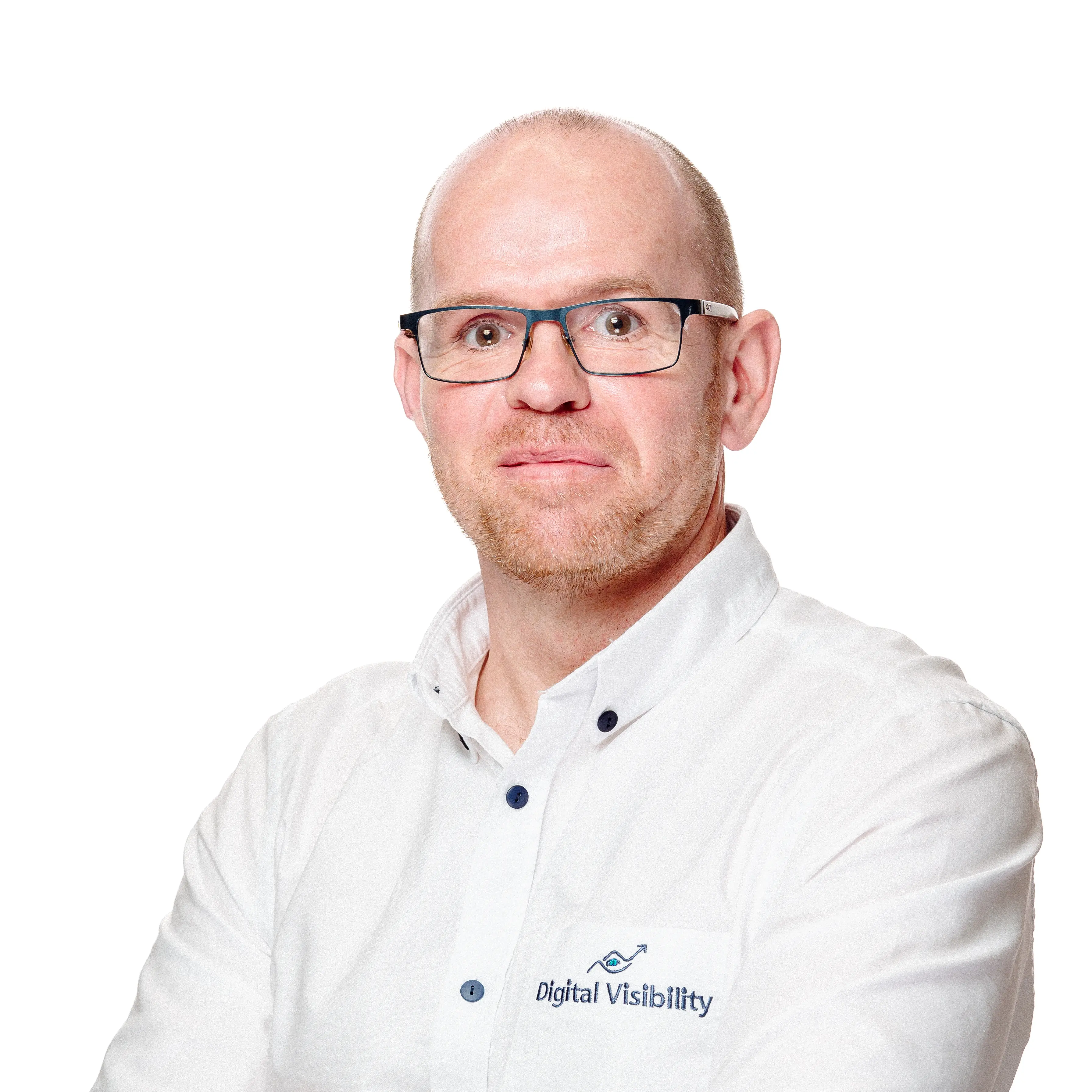
Darran Goulding
Darran Goulding is the founder of Digital Visibility, specializing in AI-powered SEO, automation, and digital strategy. With over 20 years of experience in digital marketing and web development, Darran helps businesses optimize for both traditional search engines and AI platforms like ChatGPT, Claude, and Perplexity.
View Full Profile →We'd Love to Hear Your Thoughts!
Have a question about these strategies? Want to share your own experience? Your insights are valuable to our community. Reach out to us directly and we'll be happy to continue the conversation.
Contact Us to Comment